
FROM PILES
TO PROFIT

A CONTRACTOR'S GUIDE TO
RECYCLING ASPHALT
MILLINGS
Turn Reclaimed Asphalt into Revenue
with a Proven Screening Blueprint
Screening & Recycling Asphalt Millings: Turn Old Pavement into Profitable Material

Every year, millions of tons of asphalt are removed from roads,
parking lots, and driveways. Instead of sending that material to a
landfill, contractors are finding new ways to recycle asphalt
millings into a valuable product. With the right equipment,
reclaimed asphalt can be screened, cleaned, and reused for
everything from road base to new driveways.
A portable screener makes this process faster, more efficient, and
more profitable by separating oversized material, debris, and
contaminants from usable asphalt millings.
What Are Asphalt Millings?
Asphalt millings, also known as Reclaimed Asphalt Pavement
(RAP), are produced when a milling machine removes the top layer
of an existing asphalt surface. The material consists of crushed
stone, sand, and asphalt binder that still has value long after it
leaves the roadway.
Rather than disposing of it, contractors can process and reuse
asphalt millings in numerous applications, reducing both material
costs and environmental impact.

Why Screen Asphalt Millings?
Freshly milled asphalt often contains chunks of varying sizes, dirt,
vegetation, and other unwanted material. Screening helps
produce a more consistent finished product by removing
oversized pieces and foreign debris.
Benefits of screening asphalt millings include:
- Produce a uniform material for resale or reuse.
- Remove large chunks that can make grading difficult.
- Eliminate sticks, roots, and other contaminants.
- Improve compaction and finished appearance.
- Increase the value of recycled material.
- Reduce waste going to landfills.
Whether you’re preparing material for residential driveways or
commercial road projects, properly screened millings create a
better finished product.
Common Uses for Screened Asphalt Millings
Contractors and property owners use screened asphalt millings for
a wide variety of projects, including:
- Gravel road resurfacing
- Farm and ranch roads
- Residential driveways
- Equipment yards
- Parking lots
- Walking trails
- Construction entrances
- Base material beneath new asphalt
When compacted correctly, asphalt millings create a durable surface
that sheds water better than loose gravel while requiring less
maintenance.
Choosing the Right Screen Size
Different projects call for different finished material sizes.
Finer screens produce a smoother product that compacts well for
residential applications, while larger openings allow greater
production for road base and heavier construction projects.
Processing Asphalt Millings Efficiently
Start with a larger mesh, such as a 2-inch by 2-inch square screen.
This quickly separates the larger asphalt chunks and produces
material approximately 1½ to 2 inches in size.
The larger screen opening allows bulky material to move across the
deck quickly rather than slowing production with a finer mesh.
Stockpile the smaller material that passes through the screen until
the first screening pass is complete.
Second Pass: Produce Finished Millings
Once the larger chunks have been separated, run the remaining
stockpile across a finer mesh, such as a ¾-inch by 4-inch elongated
screen.
This second pass produces a more consistent asphalt-millings
product suitable for driveways, parking areas, road base, and other
applications.
The result is two usable products:
- Larger 1½- to 2-inch asphalt material
- Finer screened asphalt millings
Instead of treating the oversized asphalt as waste, the material is
separated by size and prepared for different uses or resale
opportunities.
Photo Examples
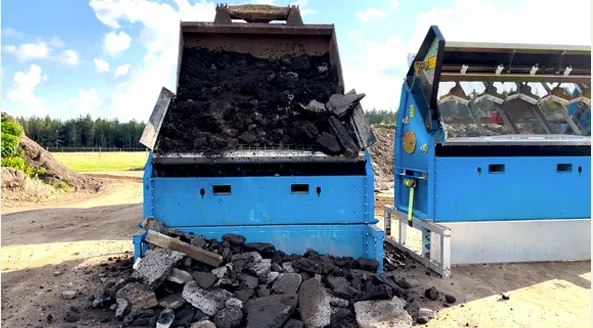
Front view
Starting with a larger mesh allows bulky material to clear
the screen quickly, maximizing throughput before
producing a finished product during the second
screening pass.
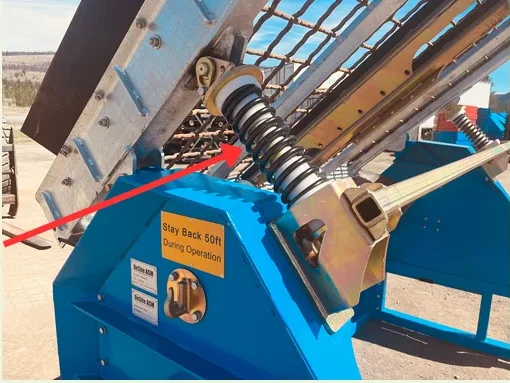
The Spring suspension allows the operator to control
feed slope and speed of screening not found in
traditional grizzly style screener. The springs play a
key role in a self cleaning deck
Back view
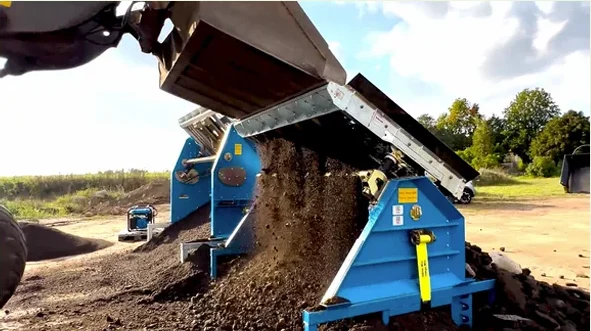
A 3x3 mesh was used in this image:Finished 2 inch to 2 and a half inch finished product
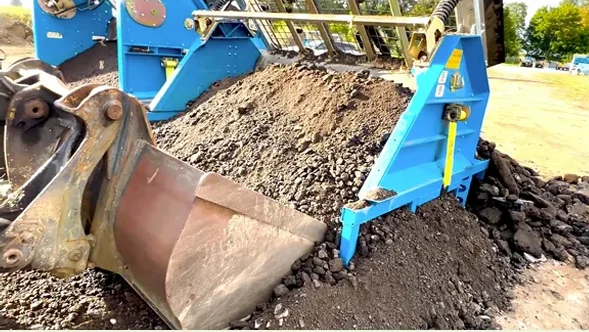
Photo Examples
(continued)
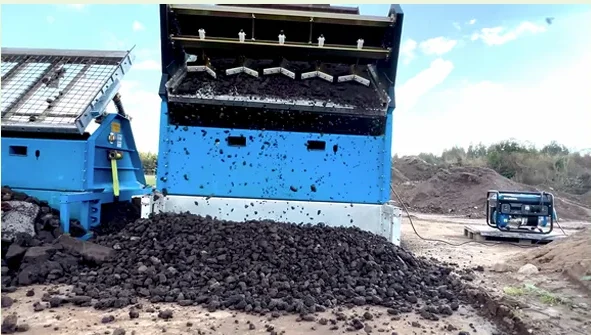
Front view: clean 2 to 2-1/2 inch product
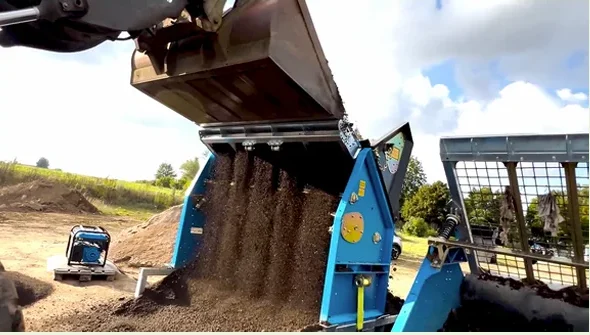
Back View
a 1/2x4 elongated mesh used in this example
7/16th down to zero material
Why Contractors Screen Instead of Crush?
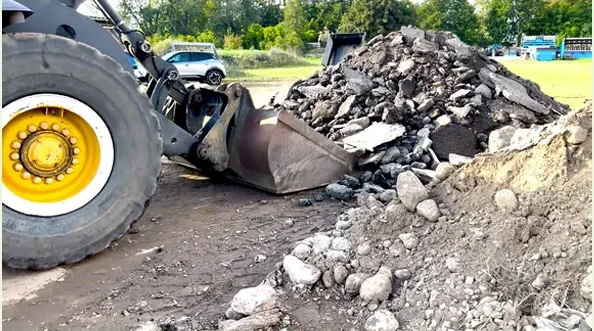
Not every asphalt recycling project requires an expensive
crusher.
Many contractors simply need to remove oversized
chunks and produce a consistent material for resale or
reuse. A portable vibratory screener offers a lower
operating cost, requires less maintenance, and is easier
to transport between job sites.
For many municipalities, excavating contractors, paving
companies, and landscape suppliers, screening is all
that’s needed to transform stockpiled millings into a
marketable product.
Portable Screening for the Job Site
One of the biggest advantages of a portable screener is
the ability to process material where it’s generated.
Instead of hauling unsorted asphalt to another location,
contractors can screen directly on-site, reducing
transportation costs and allowing finished material to
be reused immediately.
This saves fuel, minimizes handling, and keeps projects
moving.
Why Contractors Choose DeSite Portable Screeners
DeSite portable screeners are designed for contractors
who need dependable production without the complexity
of large stationary plants.
Our compact vibratory screeners can be paired with
tractors, skid steers, excavators, or wheel loaders
depending on the model. With more than 14 available
mesh sizes, operators can quickly adapt to changing
material conditions and produce consistent results
across a wide range of applications.
Whether you’re processing asphalt millings, compost,
topsoil, sand, gravel, or other aggregates, DeSite
screeners help maximize material recovery while
reducing waste and transportation costs.
Recycling That Pays
By screening and recycling reclaimed asphalt, contractors
can reduce disposal costs, lower material expenses,
create a higher-quality finished product, and even
generate additional revenue by selling processed
material.
With the right portable screener, what was once
considered demolition debris becomes another
profitable product in your inventory.
Ready to Turn Piles into Profit?
Let’s Talk Screening
Whether you’re looking to increase production, reduce disposal costs,
or choose the right screener for your operation, we’re here to help.
Call us today for a no-pressure consultation and equipment
recommendation.
Why Choose DeSite?
- Portable and Easy to Transport
- Over 14 Available Mesh Sizes
- 5-Year Structural Warranty
- Electric or Generator Powered
- Designed for Contractors, Landscapers & Municipalities
- Built to Process More Than Just Asphalt Millings
Andy Espinoza
(806) 500-3915
Saleusa@desiteproducts.com
Brad Hilmoe
(877) 254-7903
Sales@desiteproducts.com
Follow DeSite Prodcuts for demos, customer projects and
screening tips.




Lean more at
Desiteproducts.com